Islington Council's Audit and Risk Committee has approved the 2026/27 Internal Audit plan, which includes a significant increase in contingency days to allow for greater flexibility in responding to emerging risks. The plan allocates 130 contingency days out of a total of 776 audit days, aiming to enhance the council's ability to adapt to unforeseen challenges throughout the year.
During the meeting on Thursday, 19 March 2026, the committee reviewed and approved the Internal Audit strategy and the draft plan. The strategy outlines the service's purpose: to provide independent and objective assurance to members and senior management, supporting effective governance and internal control. The plan covers various areas including corporate risks, community wealth building, health and social care, children and young people, environment and climate change, homes and neighbourhoods, and resources.
Chris Martin, Assistant Director of Audit & Risk, explained that while the in-house team possesses strong local knowledge, external specialists are used to supplement workload and skill requirements. He outlined a strategy to build the in-house team's capacity through recruitment and apprenticeships, stating, we're interviewing in two weeks time for an in-house principal auditor and I've then got plans once we've done that to extend that out to perhaps more principal auditors and then start building our own capacity as well through the use of apprentices.
This approach aims to reduce reliance on external partners like PwC over time.
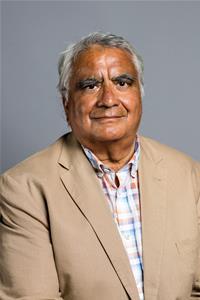
Councillor Satnam Gill OBE expressed a view that the team currently lacks the capacity for a comprehensive internal audit service, suggesting it could function more like a management consultancy to improve processes. He also commented that external providers can be more expensive than internal resources, noting that lots of other things they probably did cost three or four times more for per person hour than than doing it internally.
While specific cost comparisons are not available, this highlights a potential cost-effectiveness benefit of the developing in-house team.
Mr Martin acknowledged Councillor Gill's suggestion, stating that the plan includes a mixture of reviews to give both core assurance over governance and control, but also to add value to the organisation as well in the decision-making.
This indicates an intention to balance the core assurance function with a more proactive, consultancy-style approach to process improvement.
The committee was also informed about the upcoming de-merger of the Internal Audit service from Camden Council in July 2025. The effectiveness of the Internal Audit service in its new structure will be monitored using key performance indicators. These include:
- % of Audit Plan completed (Audits at draft report stage): >25% by end of Q2, >50% by end of Q3, >80% by end of Q4, 100% by end of May of the following year.
- Meet standards of Global Internal Audit Standards: 'Generally Conforms' or equivalent from external or annual internal review.
- High Risk Actions not addressed within timescales: <5%
- Overall Client Satisfaction: > 85% satisfied or very satisfied over rolling 12-month period.
The full Internal Audit 2026-27 Draft Strategy and Plan can be found here. Further details on the Audit Committee work plan are available here.