Haringey Council is facing a projected budget shortfall of £21.7 million for the current financial year, according to a finance update report presented to the Cabinet.
The significant deficit is attributed to a combination of factors, including £16.71 million in base budget pressures and £4.99 million from the non-delivery of planned savings. The council is also grappling with a net Dedicated Schools Grant (DSG) forecast overspend of £8.4 million, primarily related to the High Needs Block, and a net Housing Revenue Account (HRA) forecast overspend of £3.478 million.
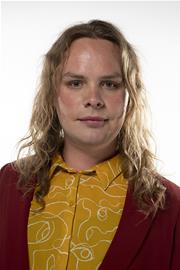
Councillor Johann Beckford, Cabinet Member for Finance and Corporate, highlighted the challenging financial position, stating that the council is facing increasing demand for services and inadequate government funding, leading to a reliance on Exceptional Financial Support (EFS).
He stressed the administration's commitment to lobbying central government for better funding and outlined actions being taken to address empty homes and progress housing developments.

The council is currently relying on Exceptional Financial Support (EFS) from the Government. The Finance Update Report Quarter 1
states: This created an ongoing reliance on Exceptional Financial Support in the current year and across the following five years.
The 2026/27 Finance Update Report Quarter 1
specifies the amount budgeted for EFS: despite setting a budget of £353.02m (which already includes £84.3m of Government Exceptional Financial Support (EFS)) in March 2026
. It also notes: the assumed use of £84.3m of Exceptional Financial Support (EFS) will not be sufficient.
Discussions with the Government regarding any changes to EFS requirements for 2026/27 or 2027/28 are expected to commence in the Autumn.

The increased demand for services is particularly affecting the most vulnerable. The Finance Update Report Quarter 1
highlights high demand for services, particularly for the most vulnerable
as a contributing factor. Further detail in the 2026/27 Finance Update Report Quarter 1
elaborates that in Children's Social Care and temporary accommodation, demand has increased more than expected when the budget was set.
The primary reason for the £8.4 million overspend in the Dedicated Schools Grant (DSG) is related to the High Needs Block. The Finance Update Report Quarter 1
states: A net Dedicated Schools Grant (DSG) forecast overspend of £8.4m was also noted, primarily related to the High Needs Block.
The 2026/27 Finance Update Report Quarter 1
further clarifies that this reflects the underlying pressure to support those with special educational needs, where numbers requiring support and the cost of commissioned placements continues to increase.


The shortfall is also exacerbated by the non-delivery of planned savings. The Finance Update Report Quarter 1
states: This variance is comprised of £16.71m in base budget pressures and £4.99m from the non-delivery of savings.
The 2026/27 Finance Update Report Quarter 1
elaborates: However, a substantial element of the forecast £21.7m overspend is due to the recurring issue of non-delivery of agreed savings either from prior years or 2026/27.
The report highlights a statutory recommendation from its external auditor, which highlighted the need to strengthen its financial position through improved financial management and the delivery of savings across service areas.
The persistent failure to deliver on savings targets exposes the authority to a risk of significant financial loss.
While specific reasons for the non-delivery of each individual saving are not detailed, the report mentions cross cutting areas which are challenging to administer
and digital savings
that have not been fully identified or achieved.
In response to the financial pressures, the Cabinet approved several measures, including revenue budget virements and the receipt of grants, as well as proposed budget adjustments and virements to the capital programme. Debt write-offs approved in Quarter 1 2026/27 were also noted.
The proposed budget adjustments and virements to the capital programme were approved by the Cabinet. The 2026/27 Finance Update Report Quarter 1
confirms that Cabinet Approved the proposed budget adjustments and virements to the capital programme as set out in Table 5 and Appendix 3.
Table 5 details General Fund capital programme adjustments, showing a net budget reduction of £3.462m. This includes a budget increase of £557,000 for NCIL phase 2
and a budget reduction of £5.027m, largely related to the removal of scheme 226 – Initiatives under Housing Demand Programme.
An external funding increase of £1.009m is allocated to aids and adaptations.
Actions are being taken to address empty homes and progress housing developments. Councillor Johann Beckford outlined these measures. The 2026/27 Finance Update Report Quarter 1
states: The Housing Revenue Account is also forecasting additional financial pressure, primarily due to temporary accommodation spending. This administration has already begun to take action to turn this around when we agreed in July to take further action on empty homes by procuring a new multi-service contract. This will deliver refurbishment, compliance and remediation works more quickly, potentially doubling our ability to turn round empty homes. We've also chosen to unblock the redevelopment of the Love Lane estate in Tottenham and purchased new homes in Wood Green, increasing our ability to house residents in local council homes moving forward.
While these actions are expected to alleviate some financial pressures, their specific projected financial impacts are not detailed in the report.
Public reports pack 15th-Sep-2026 18.30 Cabinet Agenda frontsheet 15th-Sep-2026 18.30 Cabinet Decisions 15th-Sep-2026 18.30 Cabinet